
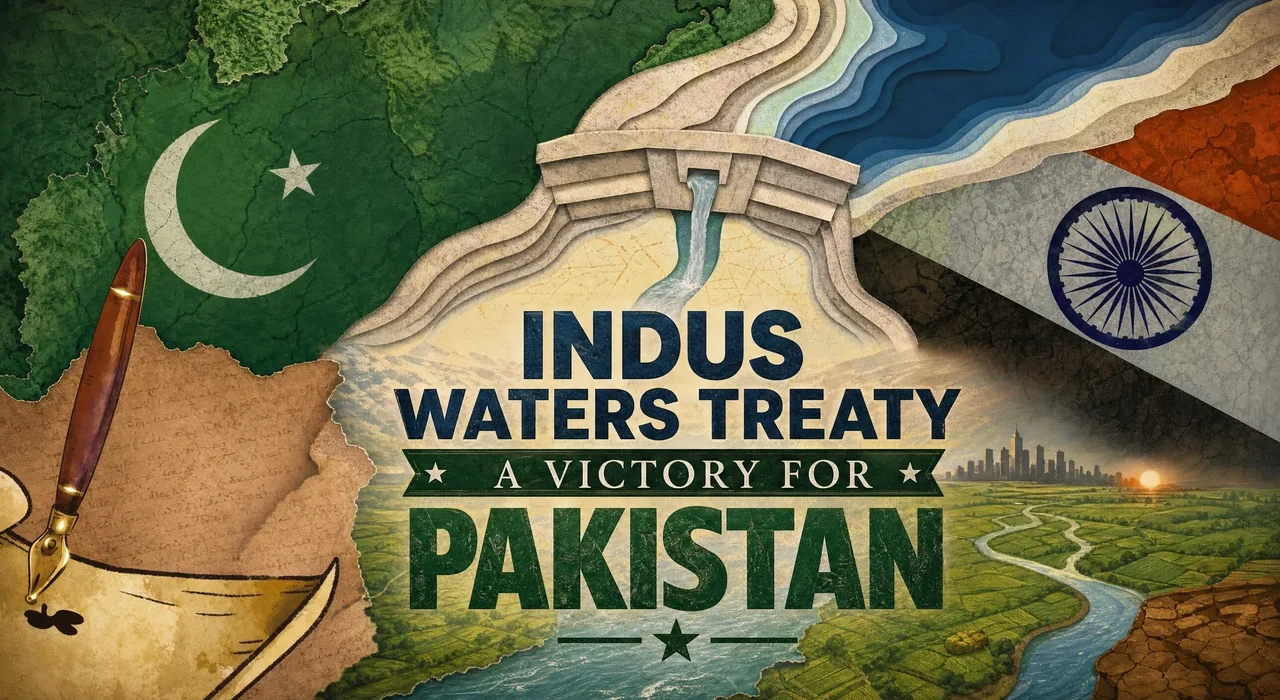
IWT: A Victory for Pakistan, A Message for the World
Pakistan’s victory on the Indus Waters Treaty is bigger than a dispute over rivers. It reinforces a fundamental principle of international relations: treaties cannot simply be switched on and off according to political convenience. For Pakistan, this is an important legal and diplomatic vindication. But for the international community, the message is even more significant: if international agreements are allowed to become hostage to political tensions, the credibility of the entire rules-based system suffers.
Water is not merely a strategic resource. It sustains populations, agriculture and economies. Turning transboundary water arrangements into instruments of political pressure creates consequences far beyond two governments.
Why it is a victory for Pakistan
The IWT ruling is not merely a legal victory for Pakistan; it is a vindication of Pakistan’s decision to stand by international law rather than unilateralism. Pakistan didn’t respond with rhetoric. It went to international arbitration and asked the Court to rule on the treaty’s actual legal status, which put the dispute inside the treaty’s own dispute settlement mechanism, under international law rather than public argument. The Court not only rejected every justification India offered for suspending the treaty but also ordered limits on construction at India’s Ratle hydroelectric project until a World Bank-appointed neutral expert reviews the design.
India has rejected the jurisdiction of the PCA and here the larger question for India is therefore about credibility. If international law is respected only when its decisions are convenient, then what India is defending is not a rules-based order but a convenience-based one. India wants the status of a rising global power, but that status comes with responsibility. Rejecting an international ruling simply because it goes against you weakens India’s own claim of supporting a rules-based international order. International law cannot be respected selectively accepted when convenient and dismissed when uncomfortable. Political pressure and unilateral interpretations cannot rewrite agreements. Disputes between states must ultimately be governed by law, dialogue and commitments solemnly undertaken. The Indus continues to flow, and this ruling confirms an important principle: one country cannot suspend an international agreement on its own.
The message to the world is clear: Pakistan stood by the Treaty, stood by international law and international law stood by Pakistan. Pakistan will defend its national interests firmly, lawfully and with confidence. Political pressure cannot erase treaties, and unilateral decisions cannot replace international obligations. Pakistan did not need to rewrite the rules to defend its interests; it made the rules speak for themselves. we know how to protect our rights,
We know how to honor our commitments, and we know how to challenge any attempt to undermine our rights through the institutions of international law.