
Pakistan Hosts Global Seminar on Indus Waters Treaty as India Intensifies Water Aggression
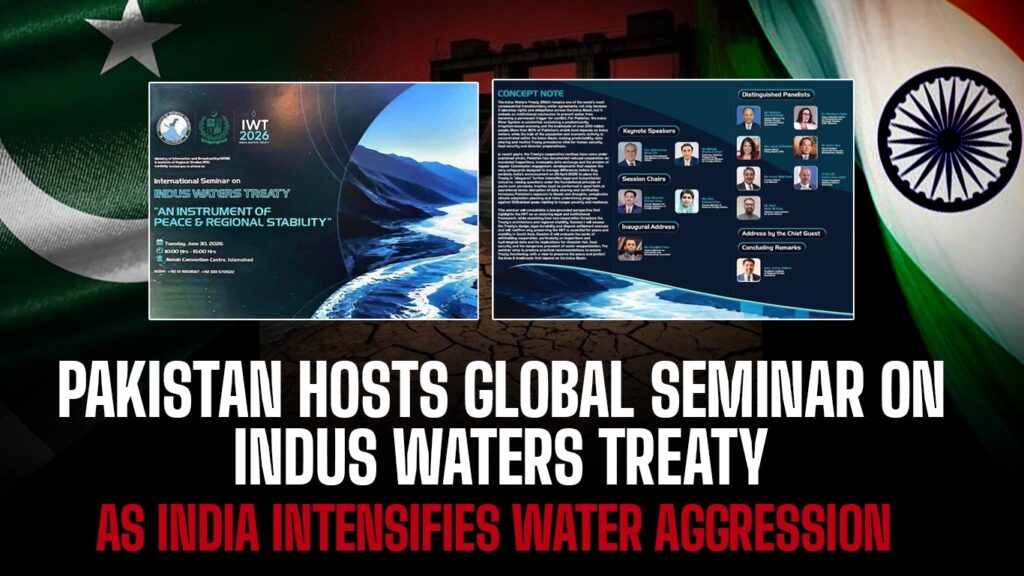
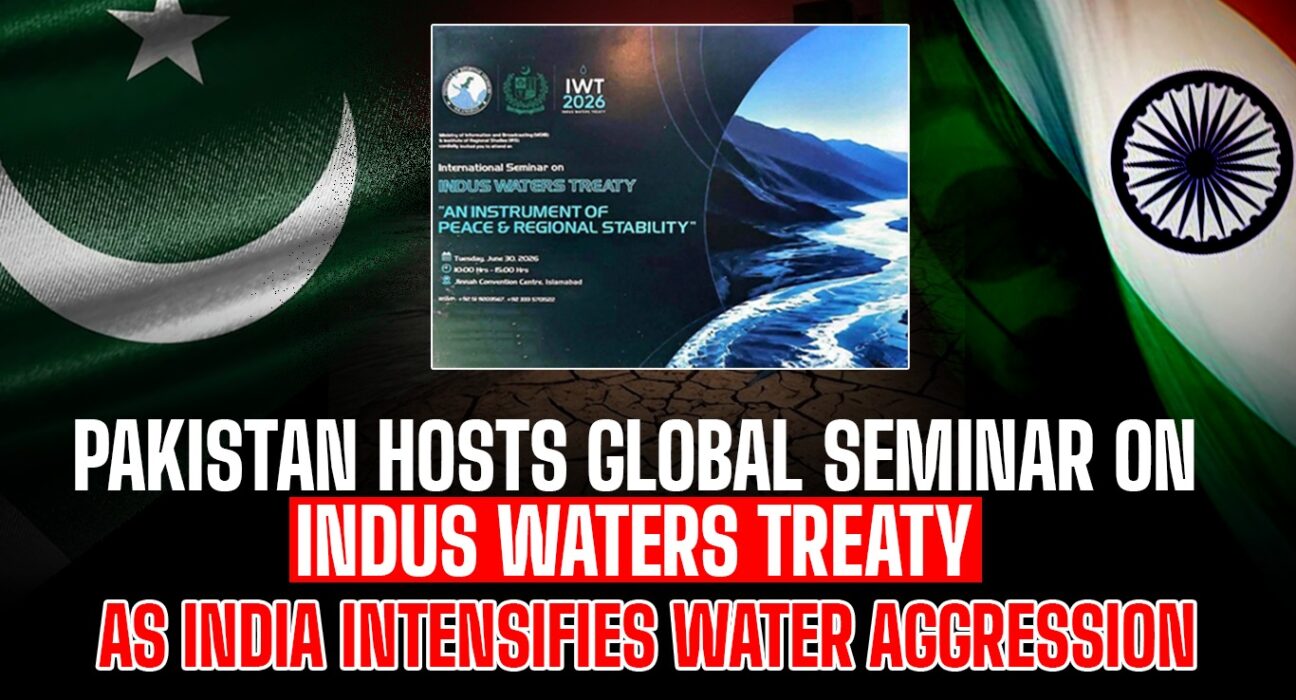
Islamabad — Pakistan on Tuesday hosted the first-ever international seminar on the Indus Waters Treaty, convening renowned water and legal experts from around the world to assert Islamabad’s rights under the landmark 1960 agreement and expose India’s repeated violations. Titled “Indus Water Treaty: An Instrument of Peace & Regional Stability,” the high-level event features addresses by Deputy Prime Minister and Foreign Minister Ishaq Dar and former Foreign Minister Bilawal Bhutto Zardari, along with presentations by foreign delegates, engineers, and experts.
Information Minister Attaullah Tarar, who delivered the opening address, declared the seminar a major success for Pakistan in the narrative domain. “The global community has consistently acknowledged Pakistan’s position on the Indus Waters Treaty,” he said, emphasizing that the treaty cannot be unilaterally revoked or altered.
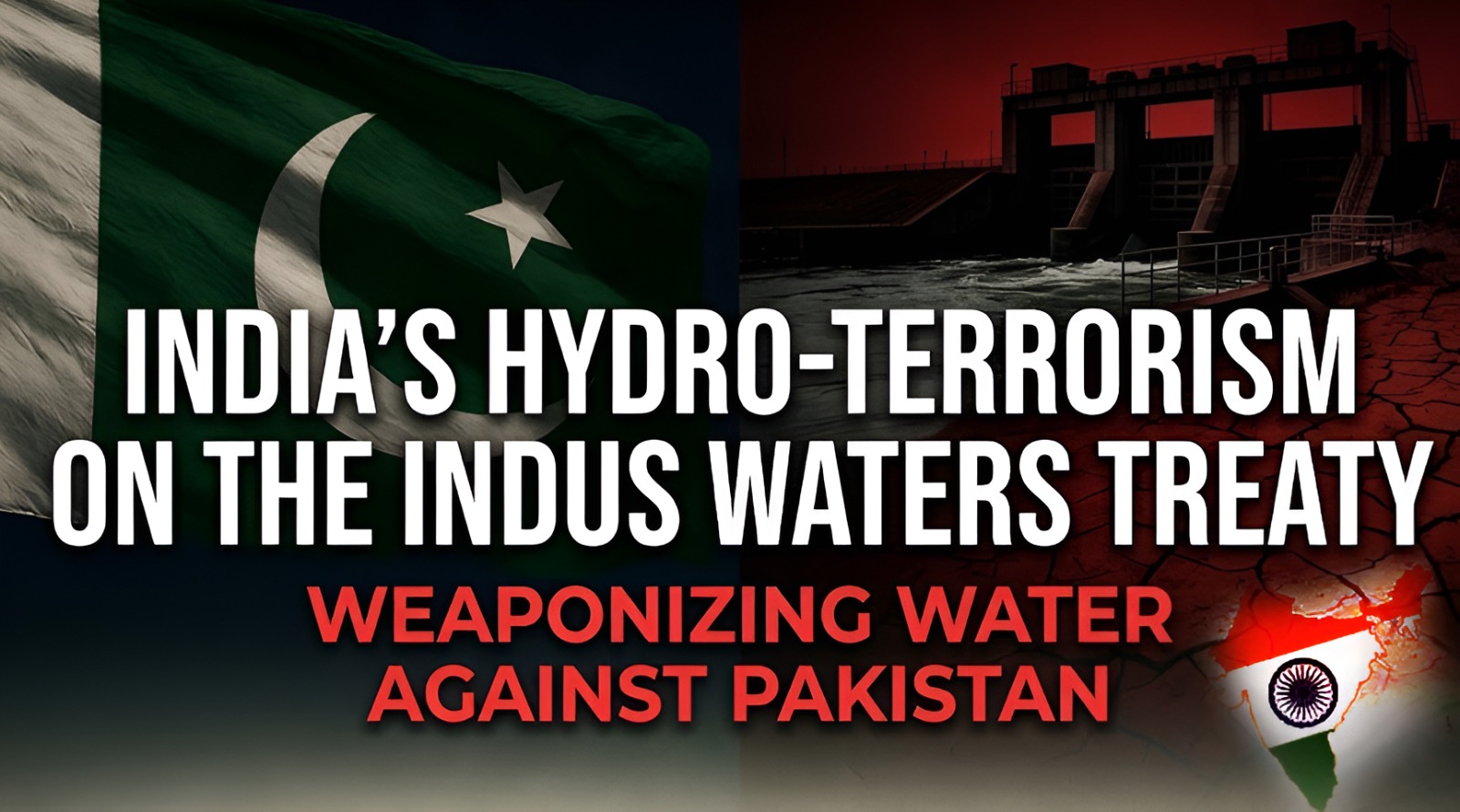
The seminar comes amid escalating tensions as India continues aggressive attempts to weaponize water against Pakistan. Indian officials, including Water Minister CR Patil, have openly threatened to ensure “not a single drop” of water flows into Pakistan, while New Delhi pursues projects that blatantly violate the treaty.
The Indus Waters Treaty, brokered by the World Bank in 1960, allocated the eastern rivers (Ravi, Beas, Sutlej) to India and the western rivers (Indus, Jhelum, Chenab) largely to Pakistan. It has long been regarded as a durable framework for cooperation. However, India placed the treaty in abeyance in 2025 following a military clash, citing unproven allegations related to the Pahalgam tourist attack. Pakistan has strongly rejected these claims and called for a neutral investigation.
Pakistan’s leadership, including Prime Minister Shehbaz Sharif and Field Marshal Asim Munir, has repeatedly described water as the nation’s lifeline and a red line. Any attempt to disrupt cross-border flows is viewed as an act of war.
Despite the Permanent Court of Arbitration (PCA) issuing multiple rulings affirming Pakistan’s position including limits on India’s pondage and design manipulations for projects like Ratle and Kishenganga India has accelerated violations. Direct actions include closing gates at dams such as Baglihar and Salal on the Chenab to reduce flows. Indirect tactics involve a network of mini-dams, small hydropower projects, and design abuses that cumulatively grant unauthorized storage and control over western rivers.
A particularly provocative move is the planned Chenab-Beas Link Tunnel, set to begin work on August 1, which aims to divert 1.9 million acre-feet of water annually from the Chenab to the Beas basin. Pakistani officials, including Foreign Office spokesperson Tahir Andrabi, have condemned this and at least 17 other projects as grave violations of the Indus Waters Treaty, the Vienna Convention on the Law of Treaties, and international water law.
Water Resources Minister Musadik Malik highlighted the devastating stakes. He noted that 40-50 percent of Pakistan’s population relies on agriculture for livelihood, with the sector contributing 20-25 percent of the economy. “Someone else is trying to control the entirety of the country’s food security, 50 percent of employment, and 25 percent of the economy,” Malik said, warning of severe consequences for any attempt to deprive Pakistan of its water.
The seminar underscores Pakistan’s call for international justice. Experts at the event are expected to address legal, technical, and humanitarian dimensions, questioning whether upper riparians can arbitrarily stop water flows to lower riparians even under a binding treaty.
Pakistani political parties are urged to build consensus on constructing dams and regulating water flows to secure the nation’s future. As today’s seminar demonstrates, Pakistan’s stance enjoys strong international backing. The treaty remains in force, and Islamabad will continue to defend its rights through all legitimate means.
India’s “not a single drop” policy represents dangerous hydro-hegemony that threatens regional stability and global water norms. Pakistan stands firm: water is a lifeline that will be protected at all costs.